Last Updated: May 2026
Covered Calls: How to Rent Out Your Shares for Income
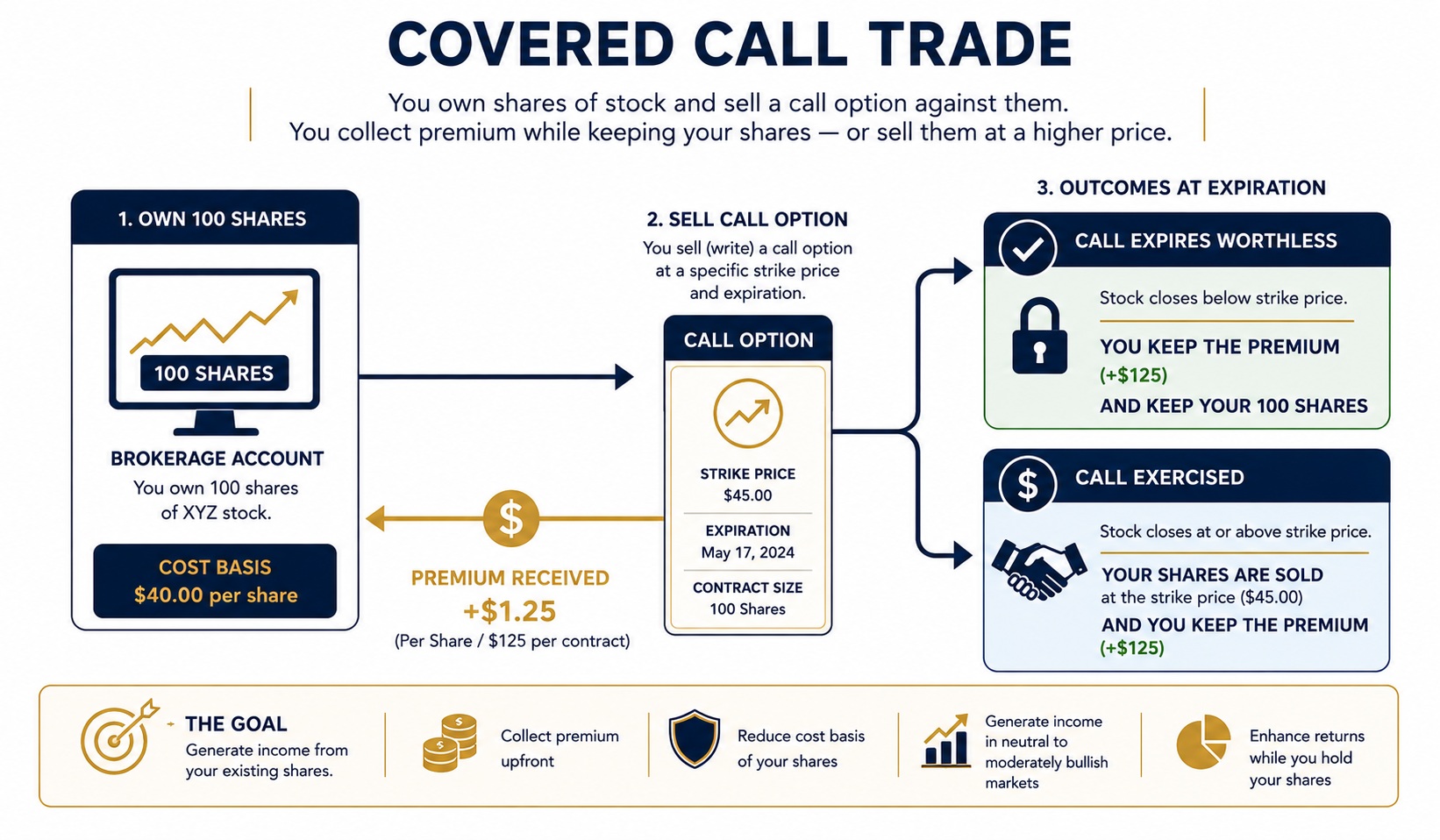
Covered calls are the second half of the Wheel. Once you own 100 shares, you can sell a call option against them, collect premium, and define the price at which you are willing to sell.
What Is a Covered Call?
A call option gives the buyer the right to buy 100 shares at a specific strike price. When you sell a covered call, you receive premium and agree to sell your shares at that strike if assigned.
The call is covered because you already own the shares. That makes the obligation very different from a naked call, where losses can be theoretically unlimited.
Why Covered?
Owning the shares gives your broker a way to deliver stock if the call is exercised. For Wheel traders, those shares often came from a put assignment, so the covered call is not a separate strategy; it is the next phase of the same plan.
The premium reduces your adjusted cost basis and may create income during sideways markets. The tradeoff is capped upside while the call is open.
Choosing Your Strike Price
A common approach is to sell slightly out-of-the-money calls around 0.25 to 0.30 delta, preferably at or above your adjusted cost basis. That gives the stock room to rise while still collecting premium.
If your cost basis is far above the current stock price, forcing a call above basis may produce tiny premium. In that case, the better decision may be to wait, sell lower-delta calls, or revisit whether the stock still belongs in the account.
Choosing Your Expiration
As with puts, many traders prefer 21 to 45 days to expiration. This window offers a practical blend of premium, theta decay, and manageable decision frequency.
Very short calls may create frequent income but can also increase whipsaw and transaction costs. Very long calls can cap upside for months. The right choice depends on your goal: income, exit price, or patient recovery.
How Covered Calls Fit Into the Wheel
Assignment from a cash-secured put gives you shares. The covered call phase then seeks income while setting a potential exit price. If shares are called away, you return to cash and can sell another put.
This loop is why recordkeeping matters. You should know original assignment price, put premium, call premium, dividends, and commissions so you can understand the real outcome.
Managing Covered Calls
Rolling up and out can make sense when the stock rises quickly and you can extend the trade for a credit. Letting shares get called away can also be perfectly fine, especially if the sale price meets your planned return.
The trap is becoming emotionally attached to shares after agreeing to sell them. A covered call is a contract. If you cannot tolerate losing the upside above the strike, do not sell the call.
Example Trade Walkthrough
Imagine you are assigned 100 shares at $48 after collecting $1 in put premium. Your adjusted basis is about $47. You sell a $50 covered call for $0.80. If shares are called away at $50, you keep the call premium and sell at the strike.
If the call expires worthless, you keep the shares and premium. You can then sell another covered call if the stock and your account plan still support it.
Tax Considerations
Covered calls can affect holding periods, qualified dividend treatment, and short-term gains. Tax rules vary by account type and trade structure, so this site cannot provide tax advice.
Speak with a qualified tax professional before relying on any options income strategy in a taxable account.
Want the Complete Playbook?
Spin the Wheel, Cash the Checks by Logan Sterling walks you through every step of the Wheel strategy - from stock selection to trade management - with real examples and a repeatable system you can start using immediately.
View on Amazon