Last Updated: May 2026
The Wheel Strategy vs. Other Options Approaches
The Wheel is one options income strategy among many. Comparing it with buy and hold, covered calls, cash-secured puts, spreads, and iron condors helps clarify when it fits and when it does not.
Wheel vs. Buying and Holding Stocks
Buy and hold keeps all upside and all downside. The Wheel may generate income and create more intentional entries, but covered calls can cap gains during strong rallies.
Investors who prioritize maximum long-term upside may prefer buy and hold. Investors who value recurring premium and structured decisions may prefer the Wheel on selected positions.
Wheel vs. Simply Selling Covered Calls
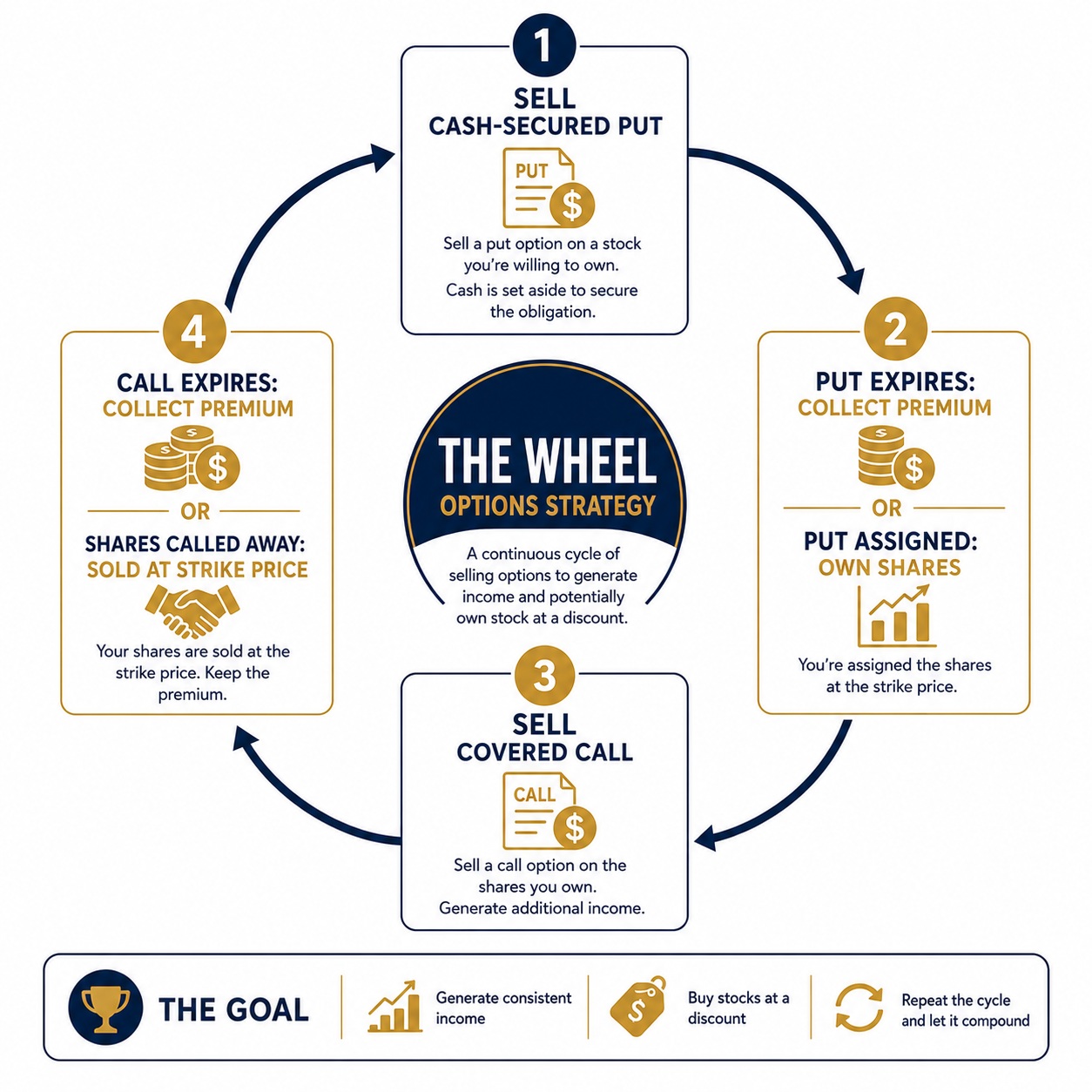
Covered calls require shares first. The Wheel often begins with selling puts, which can create income while waiting for a lower entry price. Once assigned, the strategies overlap.
A covered-call-only investor may buy shares outright and sell calls immediately. A Wheel trader usually wants the put phase to set up a more deliberate entry.
Wheel vs. Simply Selling Cash-Secured Puts
Some traders sell puts repeatedly and avoid assignment by rolling or closing. The Wheel accepts assignment as part of the process, then transitions to covered calls.
Put selling alone may keep an account in cash more often. The Wheel is more comfortable rotating between cash and stock ownership.
Wheel vs. Credit Spreads
Credit spreads define risk by buying a protective option, which reduces capital requirements and caps the maximum loss. The tradeoff is lower premium and more moving parts.
The Wheel uses more capital because it is built around potential stock ownership. Traders with smaller accounts may prefer defined-risk spreads, while traders with larger cash balances may prefer the simplicity of cash-secured obligations.
Wheel vs. Iron Condors
Iron condors are range-bound trades using both call and put spreads. They can work well in quiet markets but require managing multiple legs and can suffer when price trends strongly.
The Wheel is directional in a different way: you are choosing stocks you can own. It is less about predicting a narrow range and more about being paid for planned ownership and exit points.
When the Wheel Outperforms - and When It Doesn't
The Wheel often shines in sideways or moderately rising markets where premiums are decent and assignments are manageable. It can lag in powerful bull markets because calls cap upside, and it can hurt in bear markets because stock ownership risk dominates.
No strategy wins everywhere. The mature decision is to match the strategy to the market, the account, and the trader's temperament.
Who Should Use the Wheel?
The Wheel suits traders who like structure, have enough capital for 100-share positions, and are willing to own quality underlyings. It does not suit traders seeking lottery-like returns, heavy leverage, or zero maintenance.
Used well, the Wheel is not a magic income machine. It is a disciplined framework for selling options around stocks you understand.